ContourCanvas: Tactile Paintings
ContourCanvas is a new sensory medium that lets visitors engage directly with artwork through touch. It is a 3D printed canvas that is raised and textured to create a tactile experience.
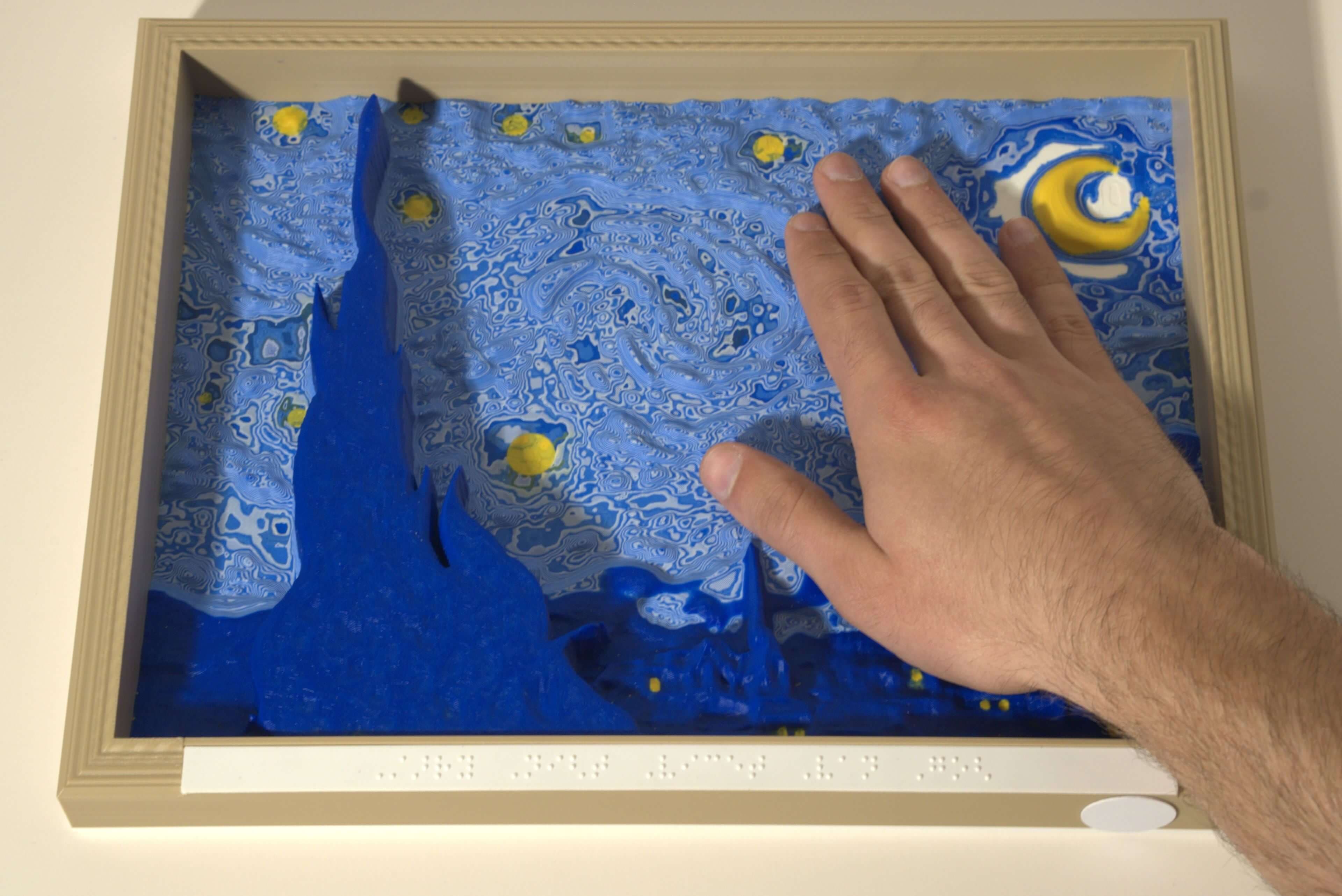
Touch-Enabled
Raised surfaces invite visitors to explore composition and form through touch.
Faithful Interpretation
Relief versions capture the essential forms and spatial relationships of the original.
Display Flexibility
Designed to be displayed alongside originals for comparison and context.
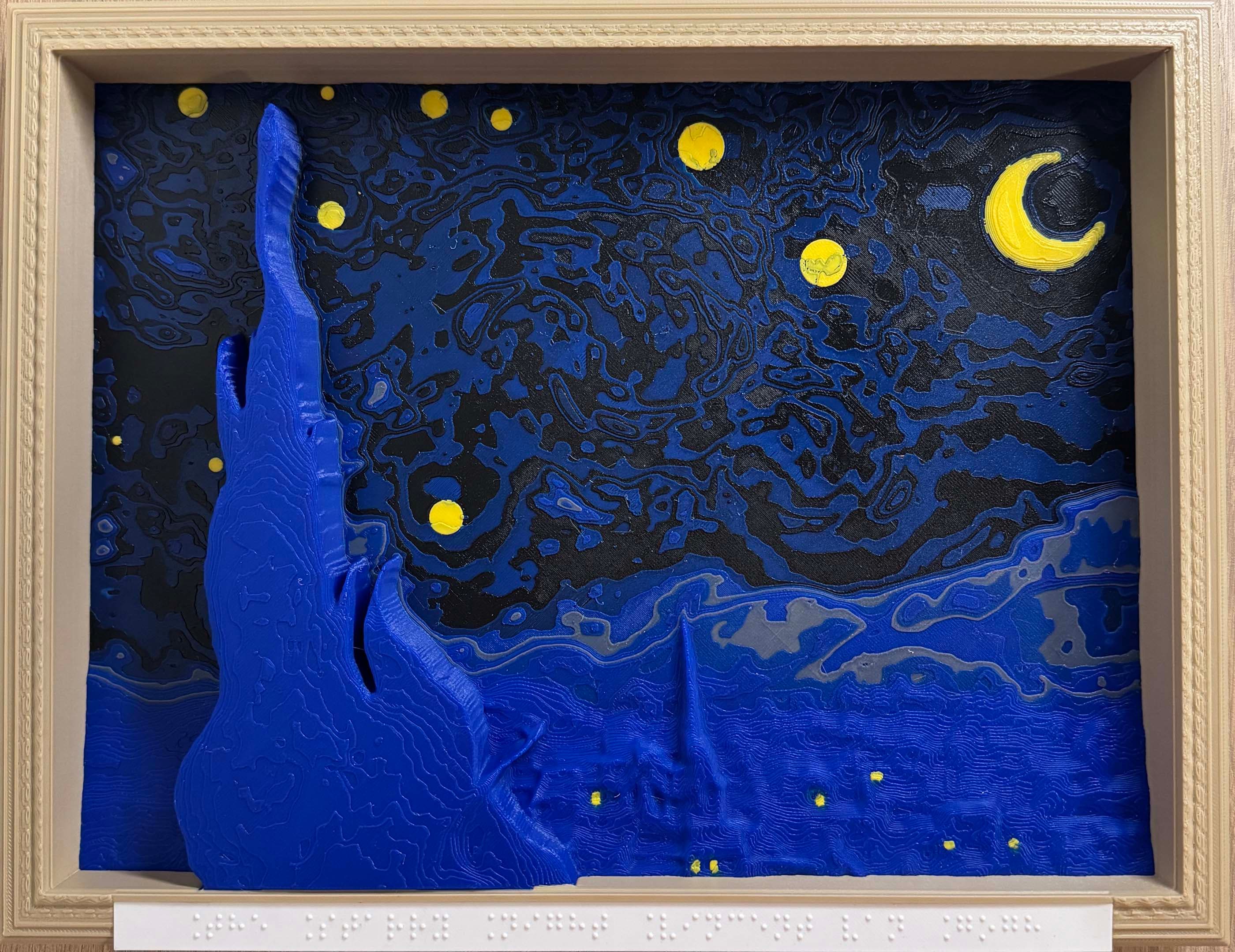
Starry Night
Vincent van Gogh, 1889
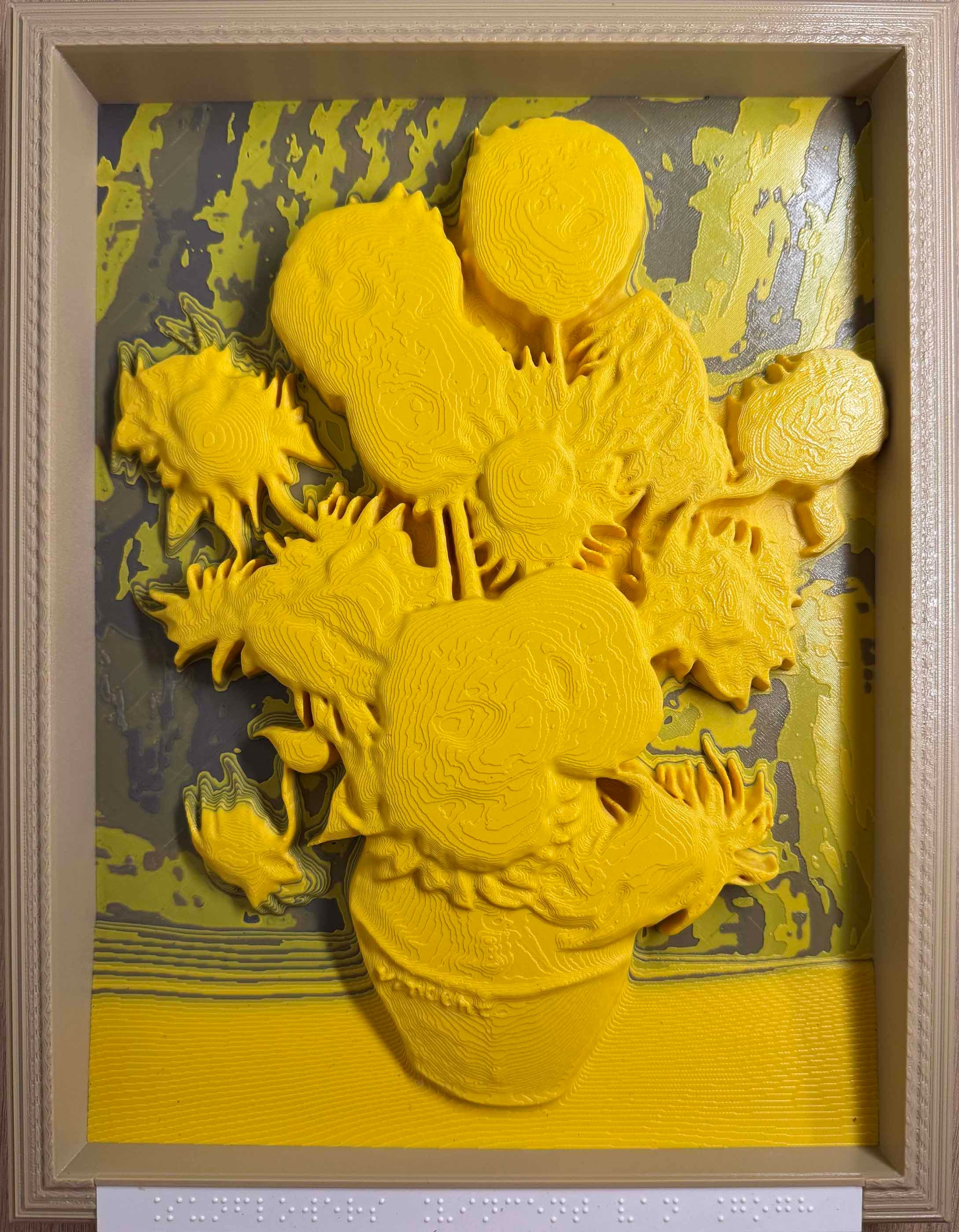
Sunflowers
Vincent van Gogh, 1888
Touch adds a dimension that sight alone cannot. Tactile relief paintings invite visitors to engage directly with artwork: feeling composition, form, and spatial relationships in a way that deepens their connection to the work. Each ContourCanvas is a unique, tactile reproduction of the original artwork, including braille labels.
"It's a really cool experience, because you can view all the raised details... I would say, definitely, take advantage of any tactile paintings that they have in museums."
"By feeling the whole thing, then you can really visualize the whole thing instead of just the pieces that people think are important enough to tell you."
"People can describe it to you, but that doesn't necessarily mean that in your mind, you're making it exactly like they're describing it... you can actually feel what the artwork is."
"A 3D model is better than a flat picture because... you don't really know the relation of each thing to each other..."
"Usually I'm just having it described to me... It was cool to be able to take more time and figure out what the painting was of, for myself, instead of just having it described to me."
"It's a really cool experience, because you can view all the raised details... I would say, definitely, take advantage of any tactile paintings that they have in museums."
"By feeling the whole thing, then you can really visualize the whole thing instead of just the pieces that people think are important enough to tell you."
"People can describe it to you, but that doesn't necessarily mean that in your mind, you're making it exactly like they're describing it... you can actually feel what the artwork is."
"A 3D model is better than a flat picture because... you don't really know the relation of each thing to each other..."
"Usually I'm just having it described to me... It was cool to be able to take more time and figure out what the painting was of, for myself, instead of just having it described to me."
"It's a really cool experience, because you can view all the raised details... I would say, definitely, take advantage of any tactile paintings that they have in museums."
"By feeling the whole thing, then you can really visualize the whole thing instead of just the pieces that people think are important enough to tell you."
"People can describe it to you, but that doesn't necessarily mean that in your mind, you're making it exactly like they're describing it... you can actually feel what the artwork is."
"A 3D model is better than a flat picture because... you don't really know the relation of each thing to each other..."
"Usually I'm just having it described to me... It was cool to be able to take more time and figure out what the painting was of, for myself, instead of just having it described to me."
Our tactile relief paintings are designed to sit alongside the original artwork, giving visitors a new way to experience the work through touch as well as sight.
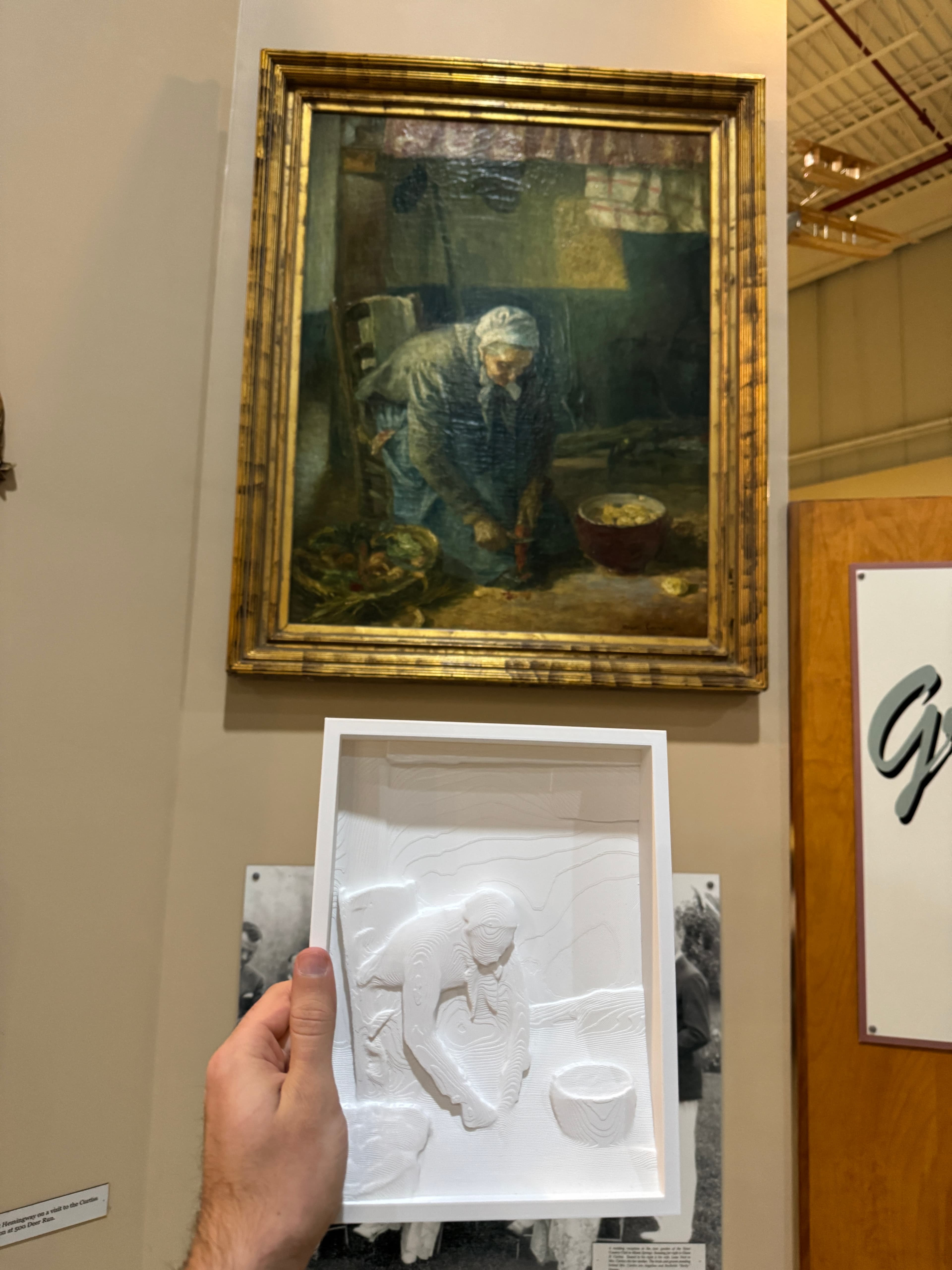
Farmlady Peeling Potatoes
Oil on canvas, 1913
Horace Raul Colmaire (19th - 20th century)
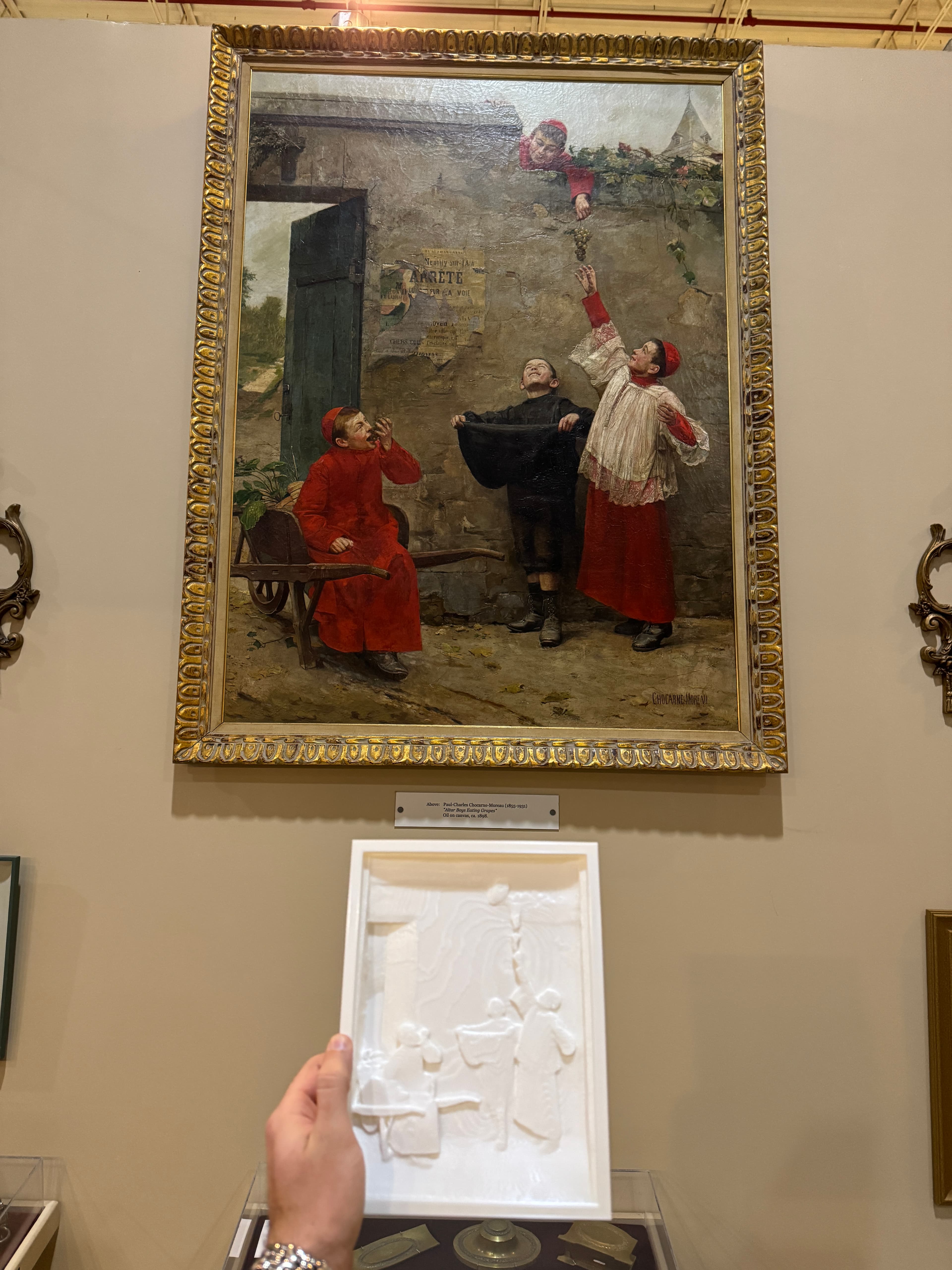
Altar Boys Eating Grapes
Oil on canvas, ca. 1898
Paul-Charles Chocarne-Moreau (1855-1931)
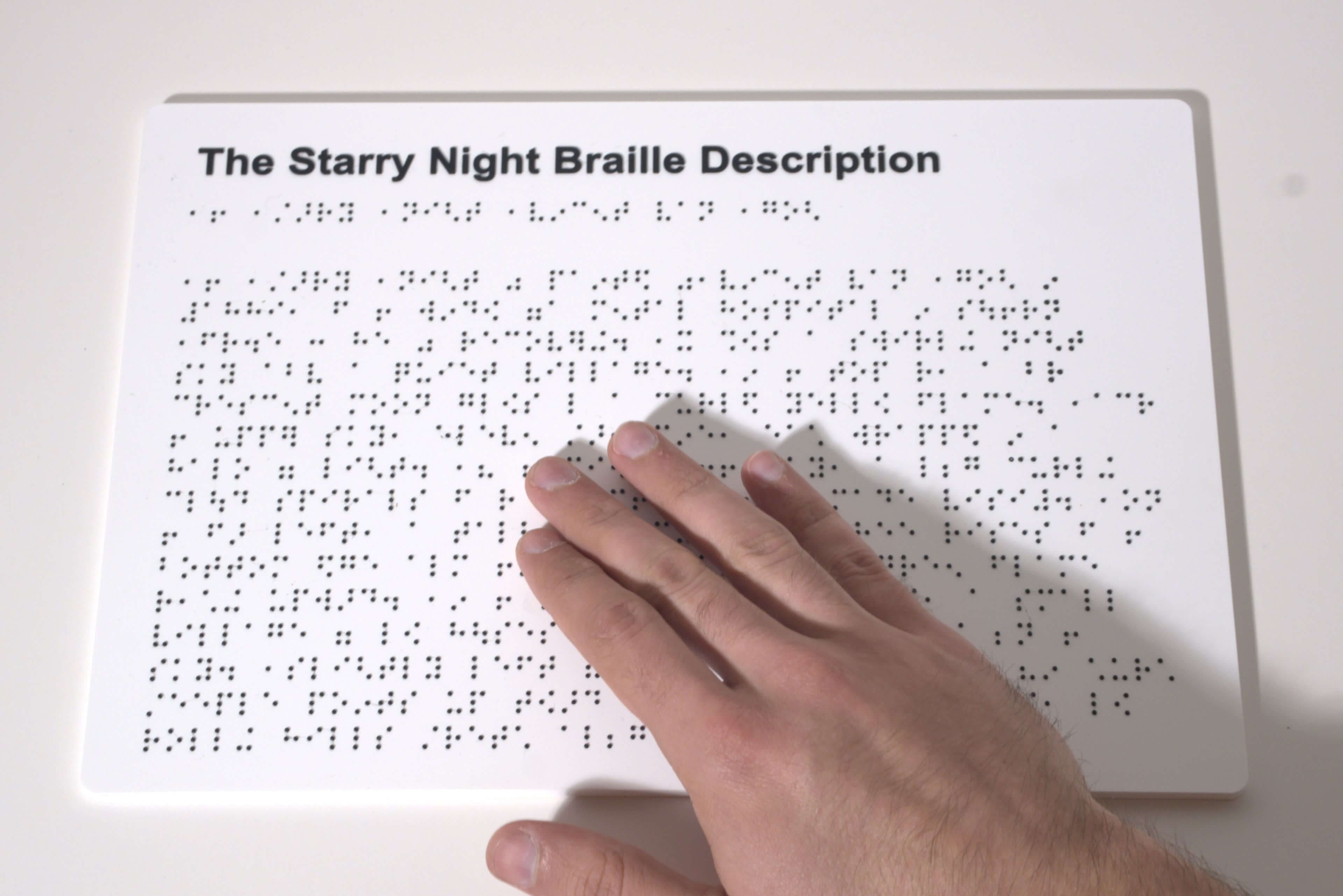
Braille Description Panels
Every ContourCanvas comes with a complete braille description panel and viewing guide, giving visitors the tools for a fully self-guided experience. Rather than depending on a staff member to narrate the work, visitors can explore at their own pace and on their own terms.
We also pair each panel with an audio dictation track for visitors who prefer to listen while they explore. Touch, read, and listen, all from a single display.
Add a New Way to Engage
Contact us to discuss how Contour Canvas can supplement your museum's offerings and give visitors a new sensory medium to engage directly with your collection.