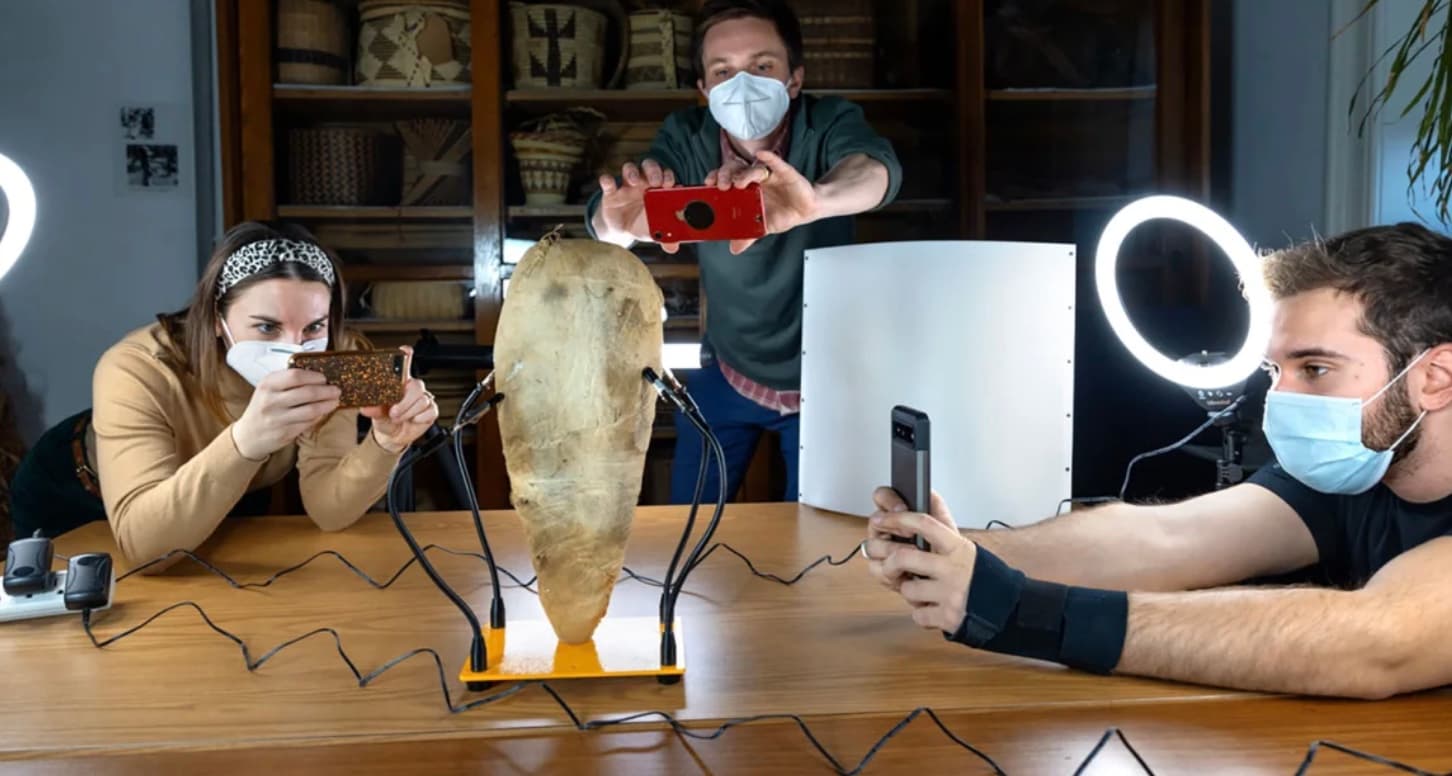
When the Cornell mummy bird captured public interest, much of the narrative revolved around figuring out what kind of bird lay inside the linen bundle and how it was wrapped. The project gained significant media attention, with coverage from Smithsonian Magazine, Nature, Archaeology Magazine, CNN, and All About Birds highlighting the interdisciplinary research. My role was to digitize that outer wrapping — to capture, in 3D, the shape, texture, and subtle folds of the artifact — without disturbing its fragile structure. Working alongside other Cornell researchers, I used photogrammetry to turn dozens of photographs into a precise, manipulable digital twin, which then fed into comparative studies and the exhibition itself.
The sacred ibis was revered in ancient Egypt as a symbol of Thoth, the god of wisdom and writing.
These mummified birds were often placed in tombs as offerings, making them invaluable artifacts for understanding ancient Egyptian religious practices.
The Challenge
Scanning a 2,000-year-old mummy wrapped in fragile linen meant working under strict handling limits. The object couldn't be repositioned or touched more than absolutely necessary, and its fibrous surface offered few strong visual features for the software to lock onto. Lighting had to be diffuse and consistent, and every movement around the artifact was planned in advance to ensure total photographic coverage without physical stress.
Key Constraints
- • No repositioning or excessive handling
- • Fibrous surface with few visual features
- • Fragile linen bandages
- • 2,000-year-old artifact integrity
Technical Requirements
- • Diffuse, consistent lighting
- • High-overlap image capture
- • Multiple elevations and angles
- • Total photographic coverage
The Process
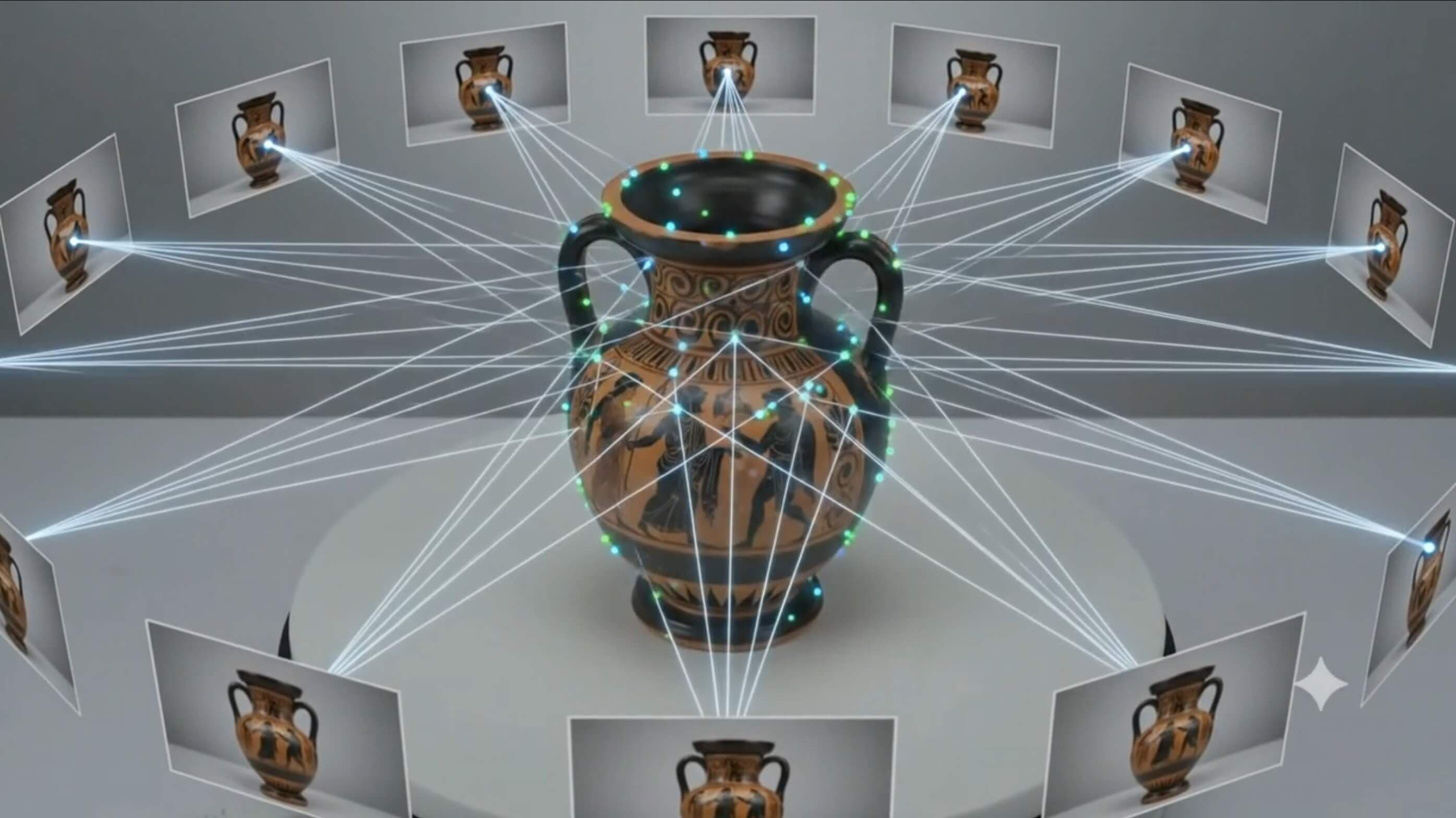
Using a controlled lighting setup and high-overlap image capture, we photographed the mummy from multiple elevations and angles, feeding the images into a photogrammetry pipeline to reconstruct a detailed mesh and texture. After cleanup and decimation, the model was aligned with CT data, allowing researchers to compare external and internal structures — a fully digital twin of the artifact.
1
Controlled Photography
Systematic capture from multiple elevations and angles using controlled lighting to ensure consistent illumination across the fragile surface.
2
Photogrammetry Pipeline
Feeding high-overlap images into photogrammetry software to reconstruct a detailed mesh and texture from the fibrous surface.
3
Model Processing
Cleanup and decimation to create an optimized 3D model suitable for research and display applications.
4
CT Data Alignment
Aligning the external 3D model with CT scan data to create a complete digital twin showing both surface and internal structures.
The Outcome
The resulting 3D model became both a research tool and a museum exhibit, integrated into a multisensory installation that let visitors explore the ibis virtually (created by Carol Anne Adams). Beyond this single artifact, the process demonstrated how accessible photogrammetry — even using open-source software and modest hardware — can bring ancient objects into the digital age without ever unwrapping them.
Project Impact
Research Applications
- • Digital twin for comparative analysis
- • Integration with CT scan data
- • Non-invasive study capabilities
Public Engagement
- • Interactive museum installation
- • Virtual exploration experience
- • Educational tool for visitors
Accessible Technology
Open-source software and modest hardware can achieve professional results
Non-Invasive Method
Complete digital preservation without unwrapping or damaging artifacts
Digital Age Integration
Bridging ancient artifacts with modern technology and research
Looking Forward
This project represents more than just a single artifact digitization — it's a proof of concept for how accessible technology can democratize digital preservation. The combination of careful planning, appropriate tools, and respect for the artifact's integrity shows that high-quality 3D scanning doesn't require expensive equipment, just thoughtful execution.
Ready to Digitize Your Collection?
Whether you're working with ancient artifacts or modern objects, we can help bring your collection into the digital age with professional 3D scanning services.
Get Started Today